
Togetsutei Releases Multilingual Audio Guide App for Arashiyama, Kyoto
KYOTO, JAPAN, October 26, 2026 /EINPresswire.com/ -- Arashiyama, Kyoto, is known for its Bamboo Grove, the World
Press Release Disclaimer: This is a press release distributed through the XPR Media network. It has not been independently verified by our newsroom.
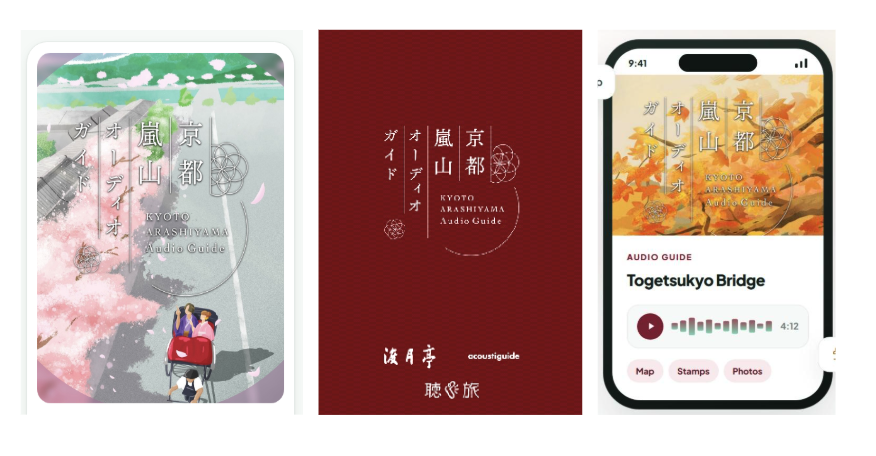

KYOTO, JAPAN, October 26, 2026 /EINPresswire.com/ — Arashiyama, Kyoto, is known for its Bamboo Grove, the World Heritage temple Tenryu-ji, Togetsukyo Bridge, and Arashiyama Monkey Park.
Within Kyoto, Arashiyama, where natural scenery and culture blend seamlessly is a popular destination attracting many tourists from both Japan and abroad.
Wandering through its landscapes is a joy in itself. Yet the true allure of Arashiyama lies not only in what meets the eye, but in the history, culture, and stories that lie beneath it.
The Kyoto Arashiyama Audio Guide smartphone app was developed by Togetsutei, a ryokan in Arashiyama, to introduce the history, culture, and heritage behind the temples, shrines, and landmarks of the Saga-Arashiyama area.
Audio Guide Covers More Than 10 Spots in the Saga-Arashiyama Area
This guide provides detailed explanations of more than 10 spots in the Saga-Arashiyama area. Tenryū-ji Temple, a World Heritage Site; Togetsukyo Bridge, synonymous with Arashiyama; the Arashiyama National Forest, with its vibrant colors in spring and fall; Hōrin-ji Temple, famous for the “Jūsan-mairi” pilgrimage; Matsuo Taisha Shrine, known for the god of sake; Rokuo-in Temple, associated with Shakyamuni Buddha; Senkō-ji Temple, located upstream from Togetsukyo Bridge and linked to the poet Suminokura Ryōi; Arashiyama Monkey Park, where you can observe the behavior of Japanese macaques up close; the world-famous Bamboo Grove Path; Nonomiya Shrine, located near the Bamboo Grove Path; Nison-in and Jōjakkō-ji temples at the foot of Mt. Ogura, just beyond the Bamboo Grove Path; as well as ryokan—Japan’s traditional form of lodging—and ryokan culture, and Kyoto cuisine, considered the pinnacle of Japanese cuisine. Simply by listening to the audio app, you will discover the true Arashiyama, as only those who know it deeply can.
The app is currently available in Japanese and English. Traditional Chinese, French, German, Spanish, and Simplified Chinese are planned for release by the end of 2027.
A Story Behind Every Landmark
According to local tradition, the name Togetsukyo (“Moon-Crossing Bridge”) comes from the following story.
The bridge was originally maintained by the nearby temple of Horin-ji and was known as Horin-ji Bridge. After the Emperor at that time abdicated the throne in 1274, he lived in retirement near the site of present-day Tenryu-ji. One evening, while drifting in a boat on the Oi River, enjoying sake and poetry, he lost track of time as dusk deepened into night. Looking up, he found a perfect full moon shining overhead. Captivated by its beauty, he watched as the moon slowly moved across the sky, appearing for all the world as though it were crossing the bridge. He described the sight in verse as being “like the flawless moon crossing over” and from that time on, the bridge came to be known as Togetsukyo, the “Moon-Crossing Bridge.”
Merely walking across the bridge and admiring the river and mountains, one would never encounter this tale. But knowing it, one may find oneself reflecting on the long passage of time, and perhaps longing to gaze upon the same full moon once admired by the courtiers of old. Arashiyama is filled with stories such as this, and we warmly invite every visitor to discover them.
How the App Works
The app is available on the App Store and Google Play. Search for “Kyoto Arashiyama Audio Guide” to download it. With the free version, you can listen to audio guides covering the introduction, the Arashiyama National Forest, Kogouzuka and Koto-kiki Bridge, the Bamboo Grove Path, Tonase Falls, Togetsukyo Bridge, and Ryokan Culture and Kyoto Cuisine (featuring Togetsutei). Beyond the audio guides, the map shows the locations of public restrooms, trash bins, convenience stores, currency exchange counters, ATMs, and coin lockers the very places visitors so often find themselves searching for. The map also helps visitors find their way to nearby destinations in the Saga-Arashiyama area.
A paid version provides access, you’ll gain access to premium audio guide content in addition to the features listed above.
Tenryū-ji Temple, a World Heritage Site;
Hōrin-ji Temple, famous for the “Jūsansan” pilgrimage;
Matsuo Taisha Shrine, famous for the god of sake;
Shikaō-in Temple, associated with Shakyamuni Buddha;
Senko-ji Temple, located upstream from the Togetsu Bridge and associated with Kakukura Ryoi;
Arashiyama Monkey Park, where you can observe the behavior of Japanese macaques up close;
Nonomiya Shrine, located near the Bamboo Grove Path;
Jōjakkō-ji Temple, situated at the foot of Mt. Ogura beyond the Bamboo Grove Path;
Nison-in Temple, right next to Jōjakkō-ji Temple
Detailed audio guides available for the nine shrines, temples, and tourist attractions listed above.
For those less familiar with Japanese culture, the difference between a Buddhist temple and a Shinto shrine may not be obvious. Indeed, even among Japanese people, few can explain what distinguishes one temple or shrine from another. The Kyoto Arashiyama Audio Guide delivers clear, accessible insights into the unique characteristics of each site, ensuring visitors can fully comprehend the profound meaning and cultural purpose behind every destination.
A Guide That Gives Back: Premium Audio Content Helps Preserve Arashiyama for the Next 100 Years
Premium access is valid for three weeks, so you can use it before, during, and after your trip. You might think three weeks is too short, but we use the proceeds from your purchase to fund the addition of more languages and new audio guide locations. Most importantly, a portion of these proceeds is donated to tourism conservation efforts in the Saga-Arashiyama area. Everyone who purchases the “Kyoto Arashiyama Audio Guide” automatically contributes to environmental conservation efforts in the Saga-Arashiyama region.
Here is an example of one such environmental conservation initiative Togetsutei supports.
Togetsutei makes annual donations to cover the cost of planting cherry trees for the “From the Past to the Present: Arashiyama Senbon Sakura Project,” which is featured in the free content “Arashiyama National Forest.” Through this support, Togetsutei aims to help ensure that Arashiyama’s spring cherry blossoms continue to be enjoyed 100 years from now.
Comments from a Ryokan Proprietor and App Creator, Born and Raised in Arashiyama
In closing, the Saga-Arashiyama region is not only blessed with beautiful scenery but is also rich in the history, culture, and heritage that underpin that scenery. However, in recent years, it seems that many tourists—both domestic and international are content with a half-day tour: walking along the Bamboo Grove Path, visiting the World Heritage Site Tenryu-ji Temple, crossing the iconic Togetsukyo Bridge to admire the view, and then heading to Arashiyama Monkey Park. The true charm of Arashiyama lies in the history, culture, and heritage of this region; it is precisely these elements that give it a profound depth and have captivated the hearts of so many people since ancient times. We hope that by listening to this “Kyoto Arashiyama Audio Guide,” we can create an opportunity for as many people as possible to experience that charm. We also hope to show you that there are charming spots just a short distance from the central areas—such as Matsuo Taisha Shrine, Nison-in Temple, and Jōjakkō-ji Temple.
Currently, we offer a total of 16 audio tours—both free and paid—but there are so many more spots in the Saga-Arashiyama area that we’d like to showcase, so we plan to continue adding more.
We’re currently preparing to launch this feature, but we plan to introduce coupons for those who purchase paid content—coupons that can be used at restaurants and souvenir shops in the Saga-Arashiyama area. Please look forward to it.
Takuya Furukawa, 4th-Generation Owner, Kyoto Arashiyama Onsen Ryokan Togetsutei
About Togetsutei
https://www.togetsutei.co.jp/lg_en/
A traditional Japanese hot-spring inn, established in 1897 (Meiji era 30th) and located right next to Togetsukyo Bridge, the landmark of Arashiyama in Kyoto.
Kyoto Arashiyama Onsen
Ryokan Togetsutei
https://www.togetsutei.co.jp/lg_en/inquiry/
Legal Disclaimer:
EIN Presswire provides this news content “as is” without warranty of any kind. We do not accept any responsibility or liability
for the accuracy, content, images, videos, licenses, completeness, legality, or reliability of the information contained in this
article. If you have any complaints or copyright issues related to this article, kindly contact the author above.

Media gallery
